Save draft night.
What if your fantasy league didn’t need 10 humans to feel alive?
Fantasy leagues depend on people. But getting enough friends together, filling every spot, and keeping the league moving can become one of the hardest parts of playing.
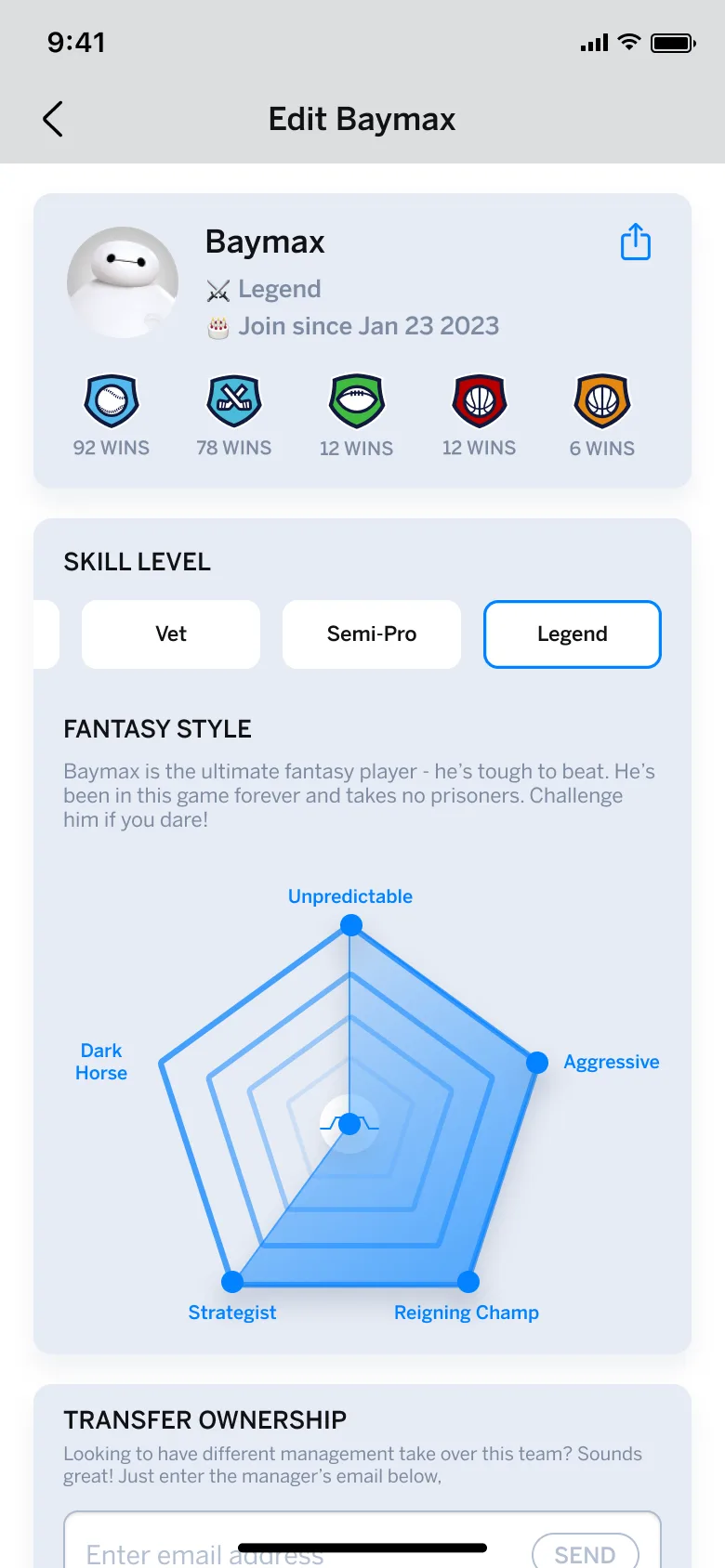
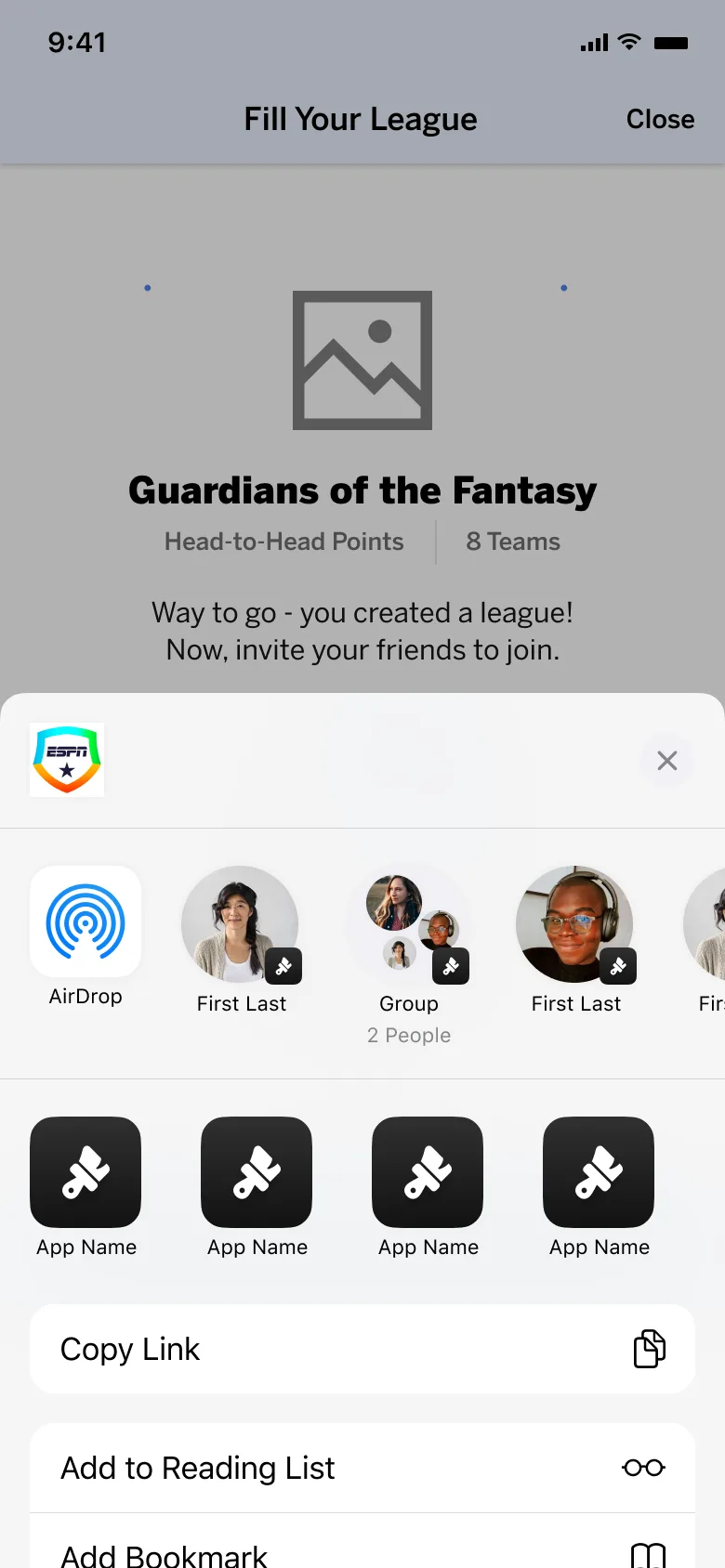
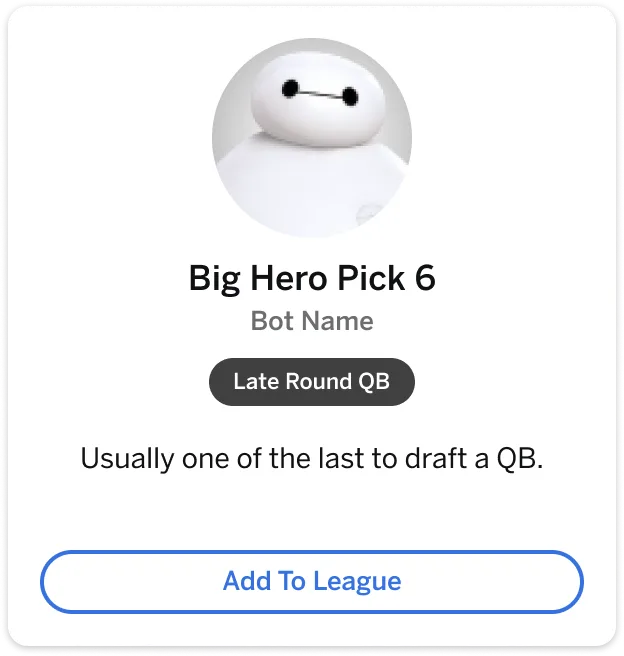
What if the empty spots could play back?
I led the Auto Teams project from research through product strategy, workflows, and design, working with a small team and close Product partnership to explore computer-managed fantasy teams with their own skill levels, drafting strategies, and personalities.
- Company
- DISNEY/ESPN
- Product
- ESPN Fantasy Football
- Role
- Product Design Lead
- Type
- 0→1 Product Concept
- Focus
- Research · Product Strategy · UX · UI · Design Leadership
- Year
- 2023-2024
The problem
Fantasy football has a people problem.
Creating a league is exciting. Filling it is harder.
Before the draft can even begin, commissioners need to invite managers, get everyone onboarded, coordinate schedules, and make sure every team has someone behind it.
When someone drops out or a league doesn’t fill, the experience can stall before the fun even starts.
- 01
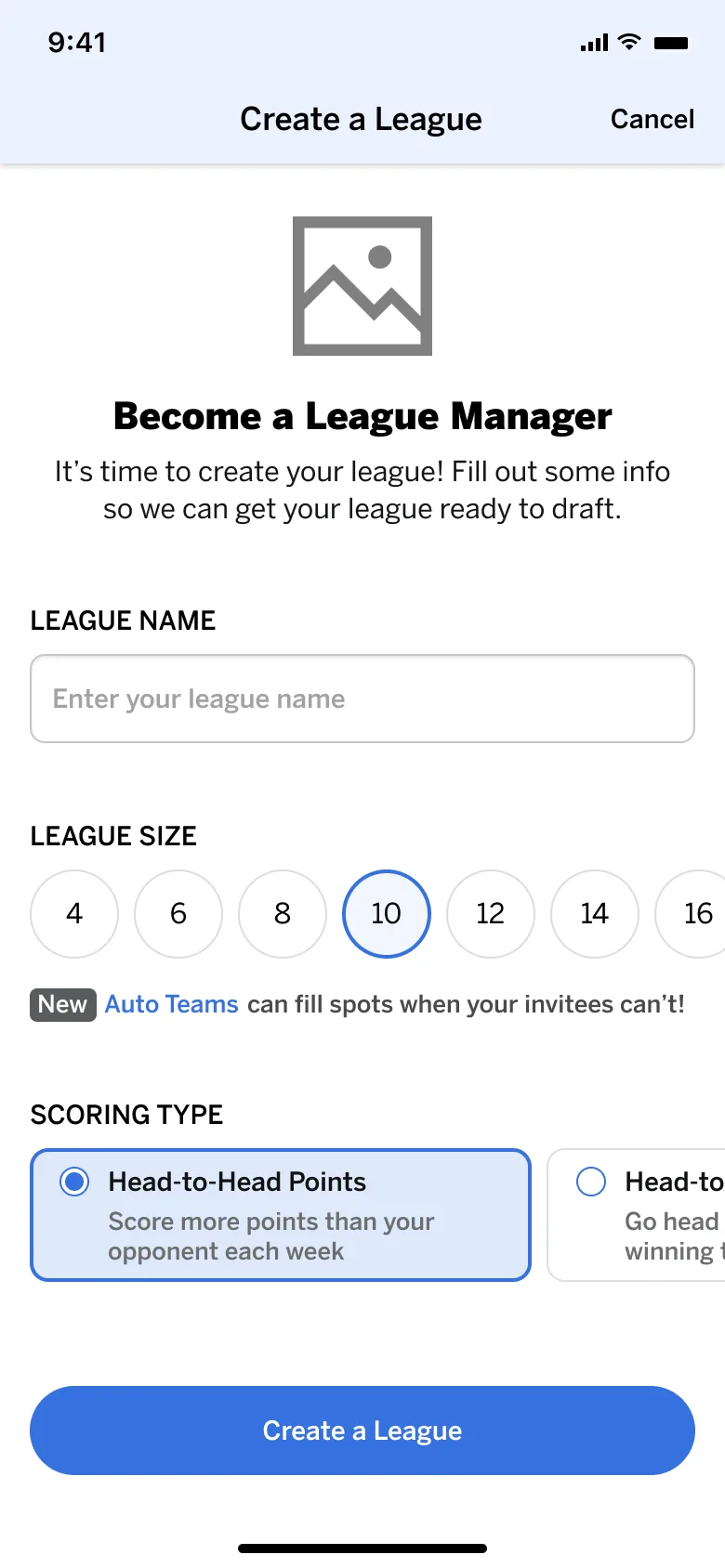
Create league
- 02
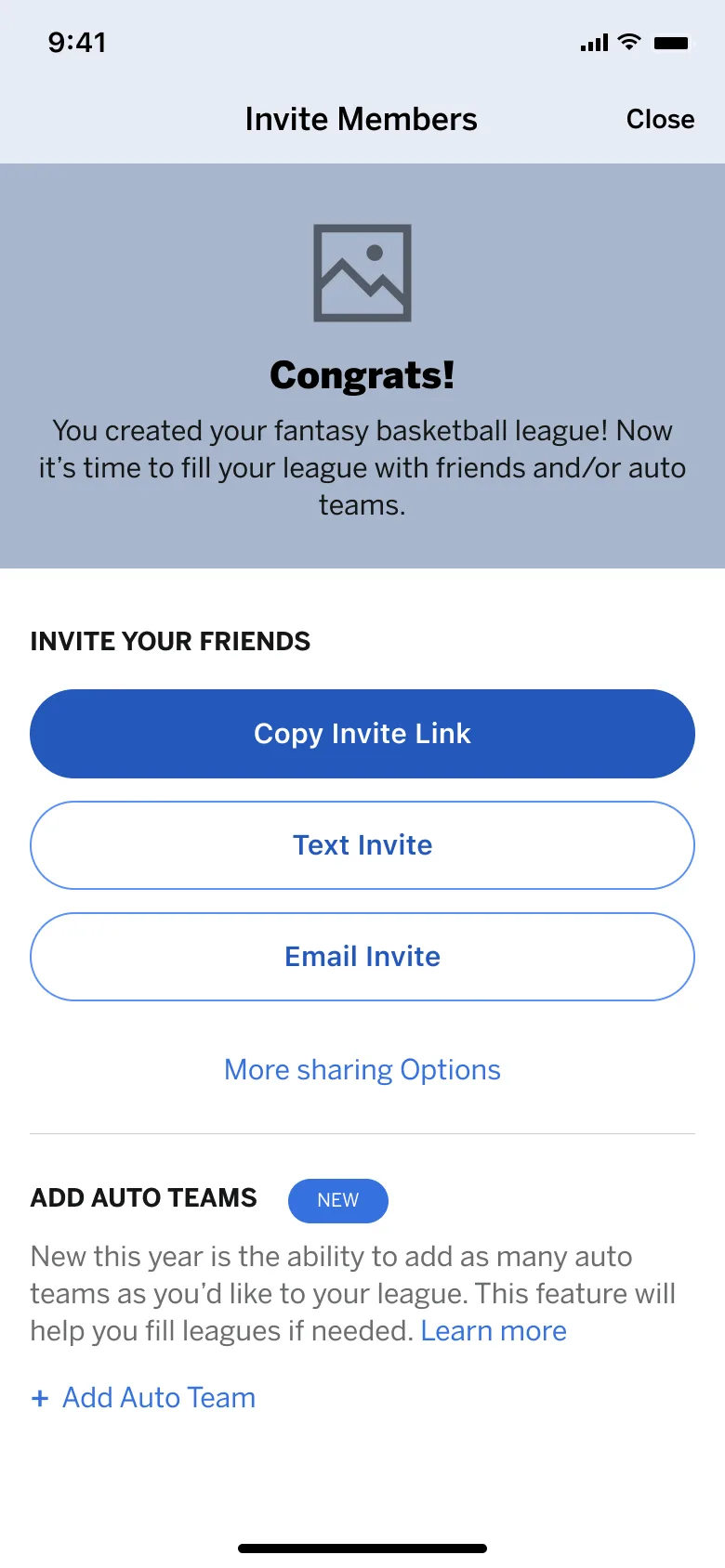
Invite managers
- 03
Schedule draft
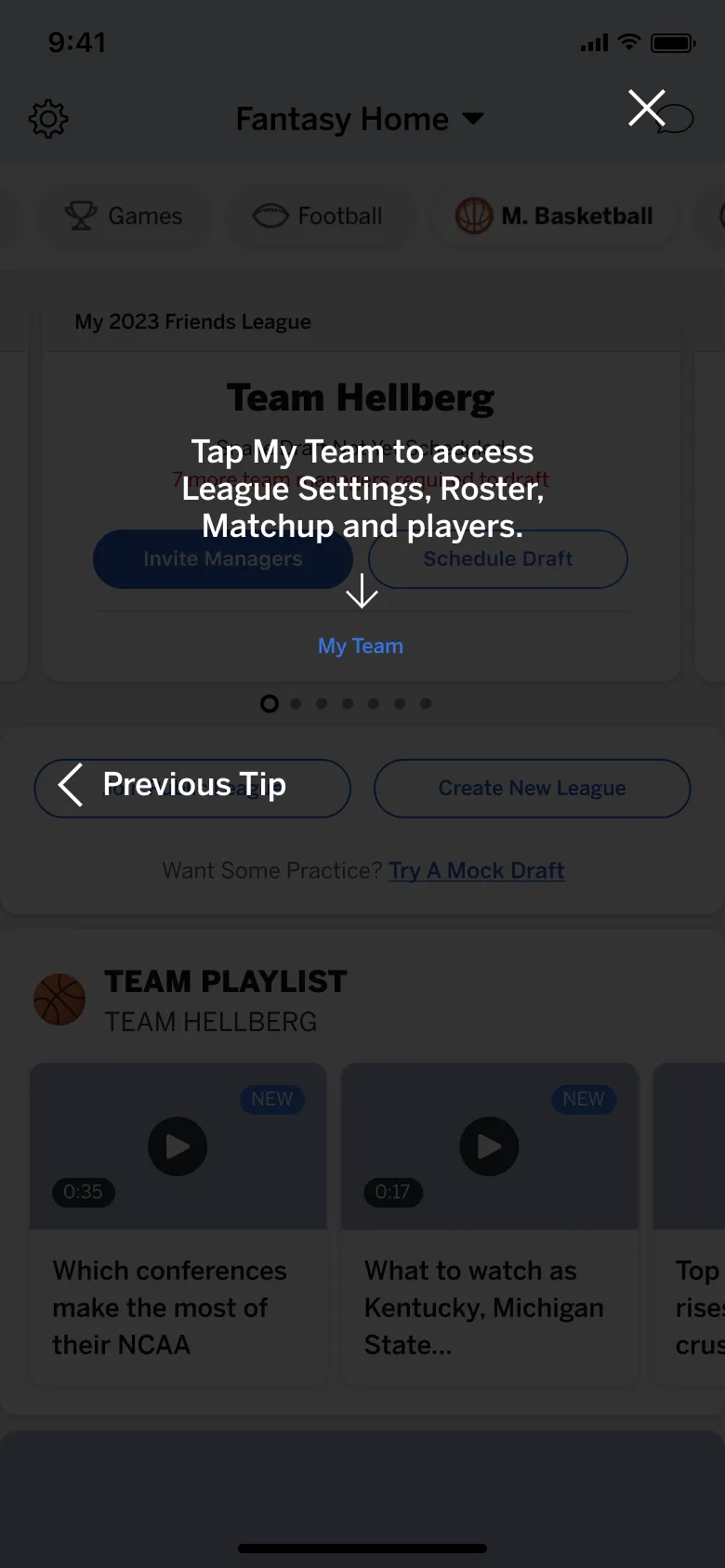
- 04
Fill every team
5 more members required to draft
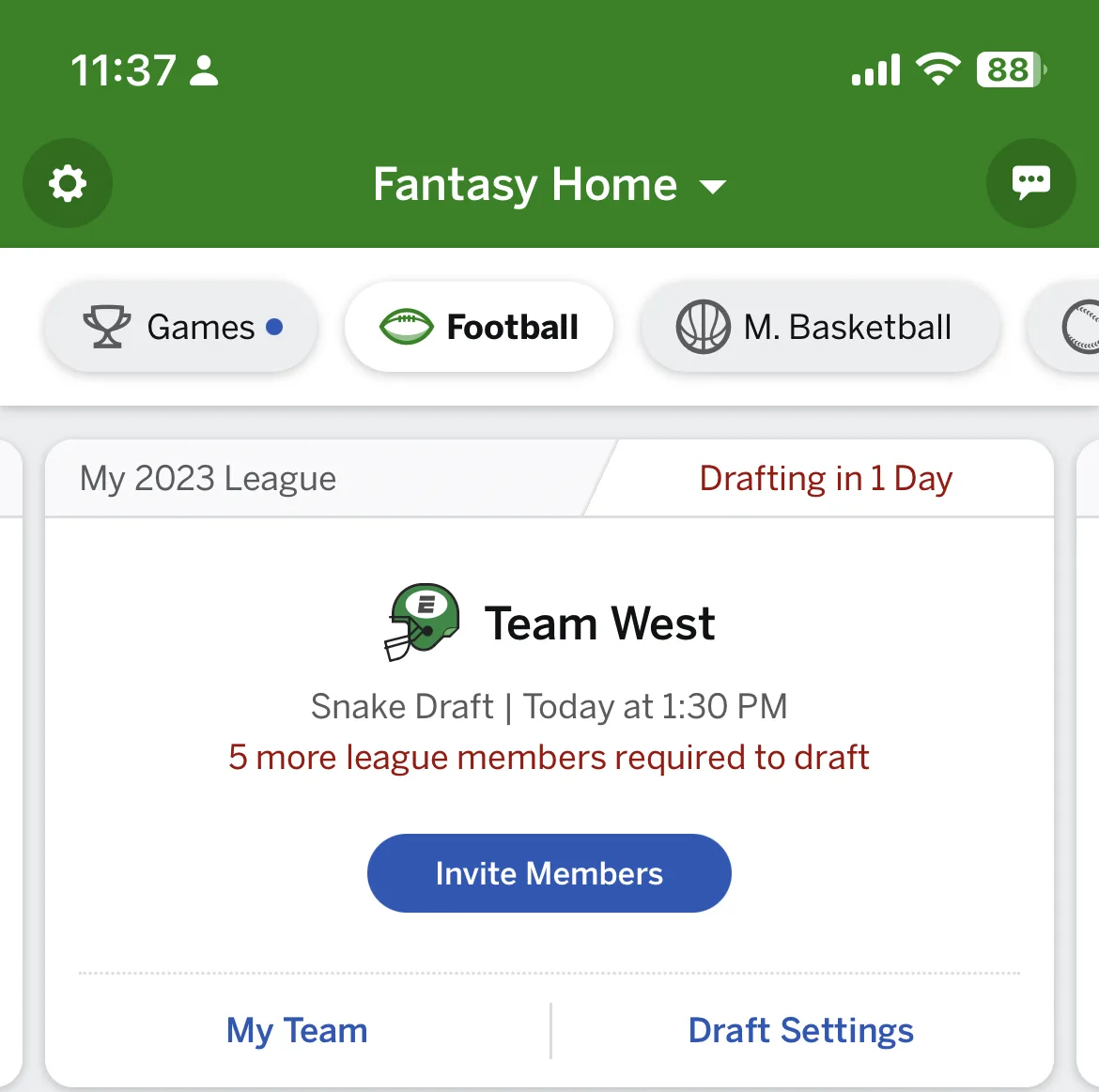
- 05
Draft night
Stalled
This wasn’t an edge case.
1.7M
Unique league managers
2.3M
Fantasy football leagues
28K
Teams already placed on auto-pilot
Project research used ESPN Fantasy data from 2022.
Auto-management was already happening.
The opportunity was to actually design for it.
The opportunity
Don’t find another player.
Create one.
0 / 10 Managers
Filling league
- Empty
- Empty
- Empty
- Empty
- Empty
- Empty
- Empty
- Empty
- Empty
- Empty
The goal wasn’t simply to add bots.
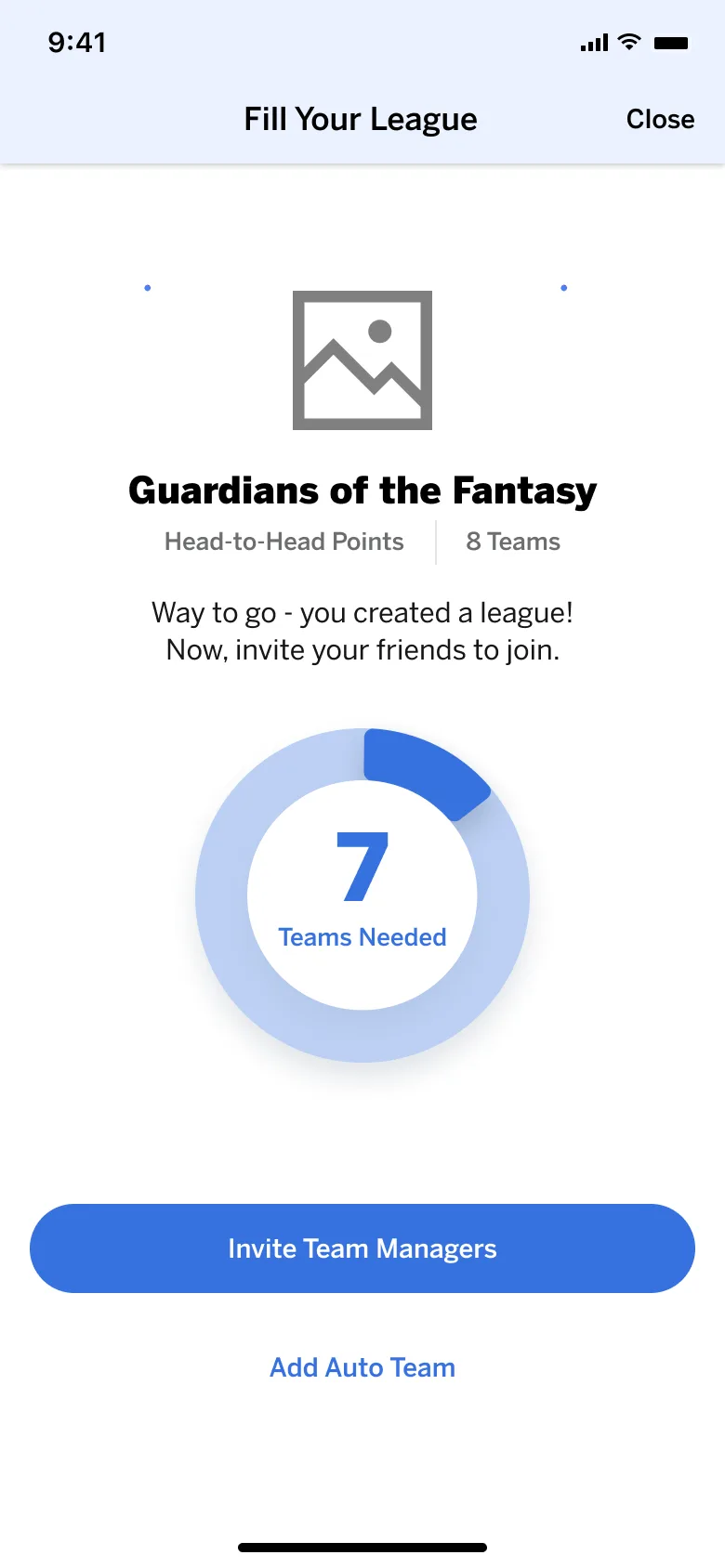
Auto Teams needed to fit naturally into ESPN Fantasy without disrupting league creation, while giving commissioners more flexibility over how they built and managed their leagues.
Fit
Don’t disrupt the existing league-creation flow.
Clarity
Make it obvious what happens when a team becomes automated.
Personality
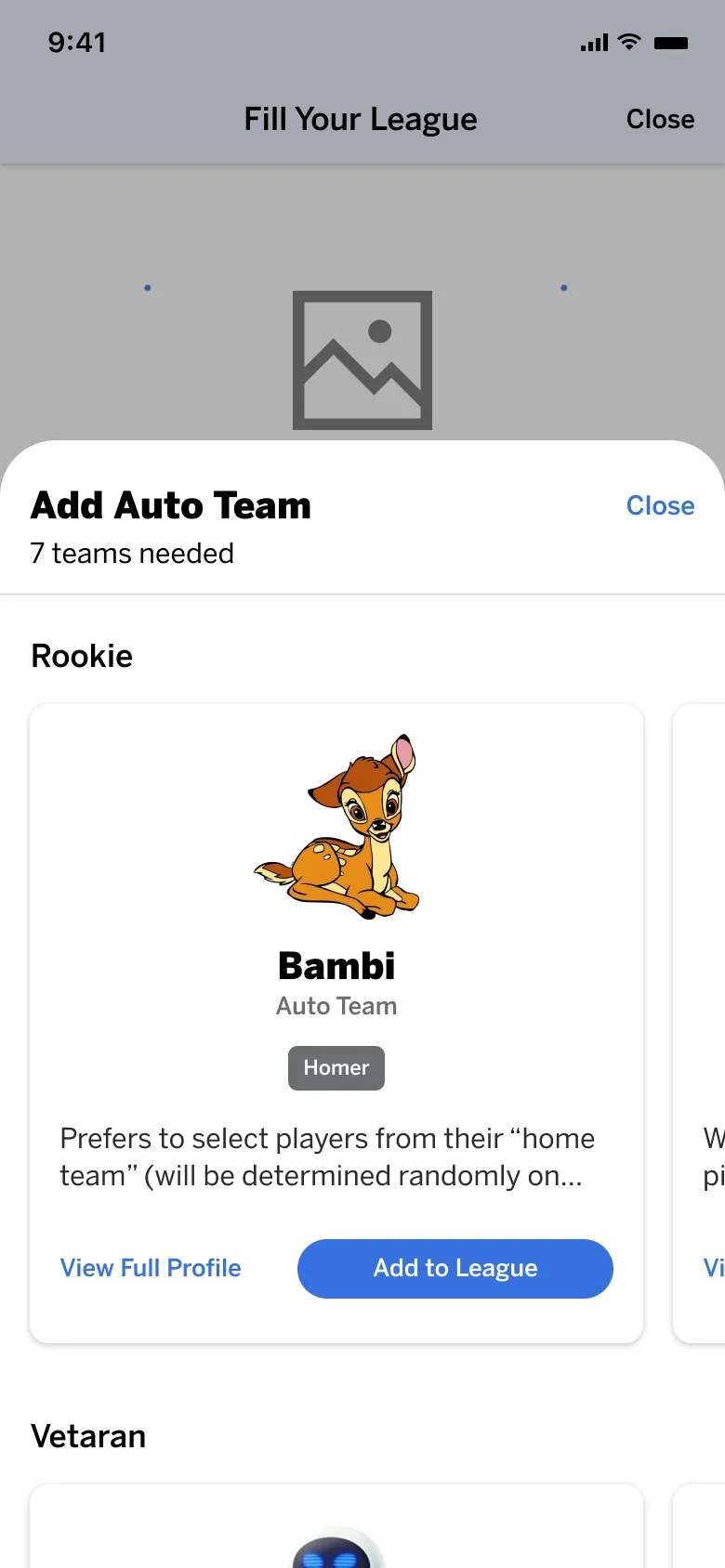
Give Auto Teams recognizable names and identities.
Complete management
An Auto Team should be able to participate beyond draft night.
Responsive
The experience must work across breakpoints.
If you’re going to compete against a computer…
Should every computer play the same way?
Research
We looked beyond fantasy sports.
To understand what could make Auto Teams compelling, I looked at products where people already compete against machines — FIFA, Madden, Chess.com, and other CPU-driven systems.
I also ran an internal survey with 25 ESPN employees across Design, Product, and Engineering, ranging from fantasy beginners to experts.
- 25
- Participants
- 3
- Disciplines
- Beginner → Expert
- Fantasy experience
What could ESPN Fantasy learn from games where people play against the machine?
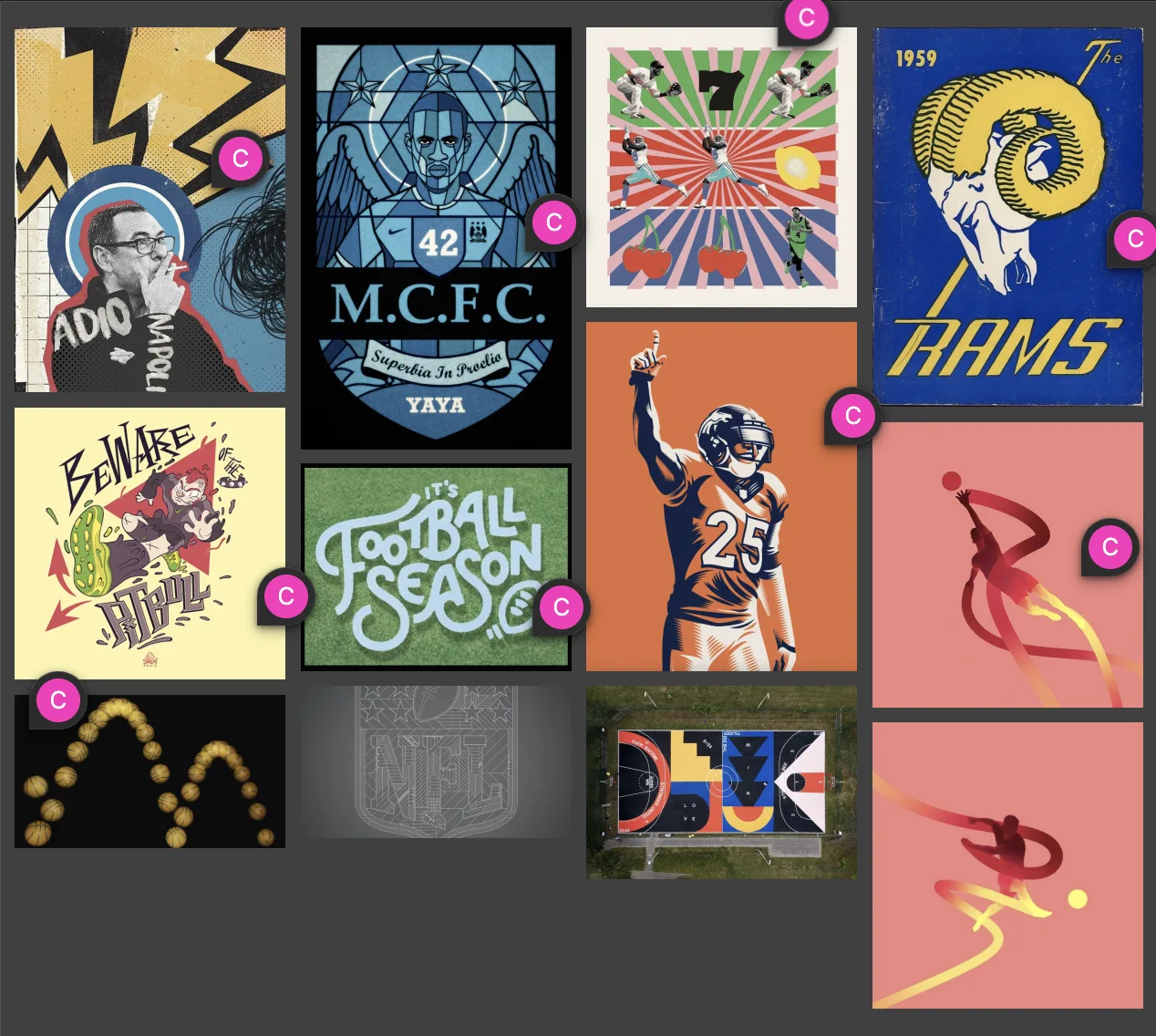
- 01
CPU opponents should behave more like humans.
- 02
Different opponents can have different play styles.
- 03
Difficulty should adapt to different skill levels.
- 04
Personality can make automated opponents more engaging.
- 05
Recognizable personas could inspire different voices and behaviors.
Four ideas kept rising to the top.
- 01
Flexibility matters.
Fans should have more ways to create and maintain the league they want.
- 02
Personality matters.
An automated opponent becomes more compelling when it doesn’t behave exactly like every other automated opponent.
- 03
There was demand.
Research reinforced the value of making automated teams a deliberate part of the Fantasy experience.
- 04
The idea could grow.
Auto Teams opened opportunities beyond simply filling an empty league spot.
Then the project changed.
We weren’t designing bots anymore.
We were designing fantasy players who didn’t exist.
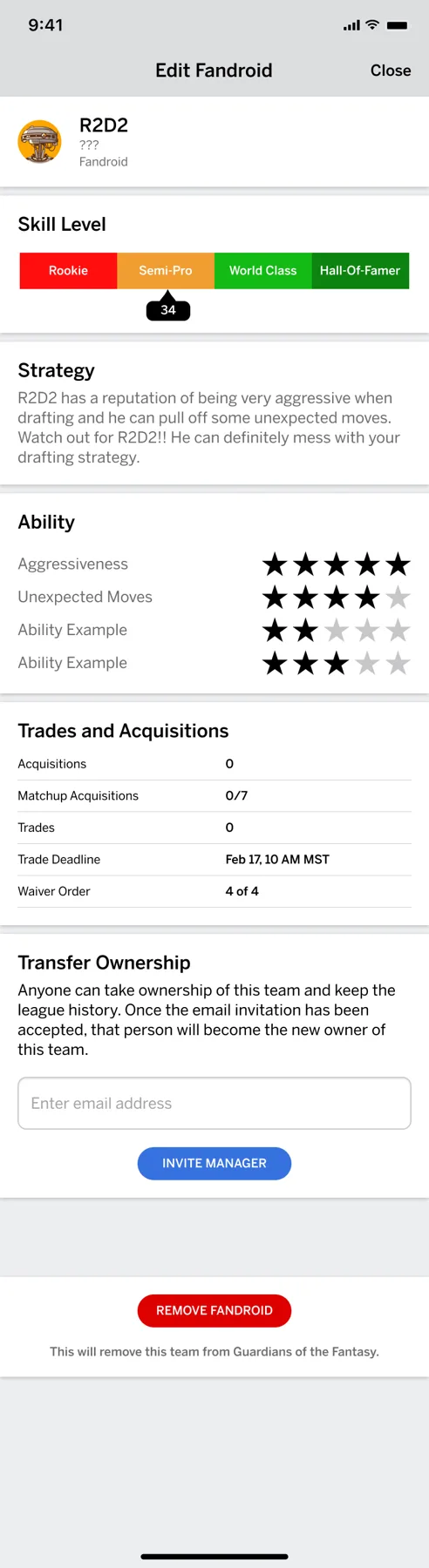
Every Auto Team needed a brain.
How good are they?
- Adds / drops playersYes
- Uses injury slotYes
- Updates starting lineupYes
- Optimizes lineupYes
- Makes tradesNo
01 · First iteration
02 · Second iteration
Strategy
Skill tells you how good they are.
Strategy tells you how they play.
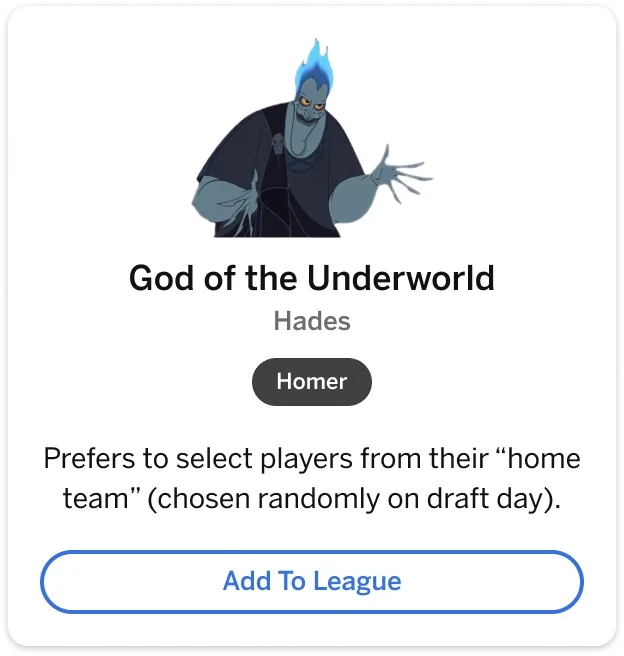
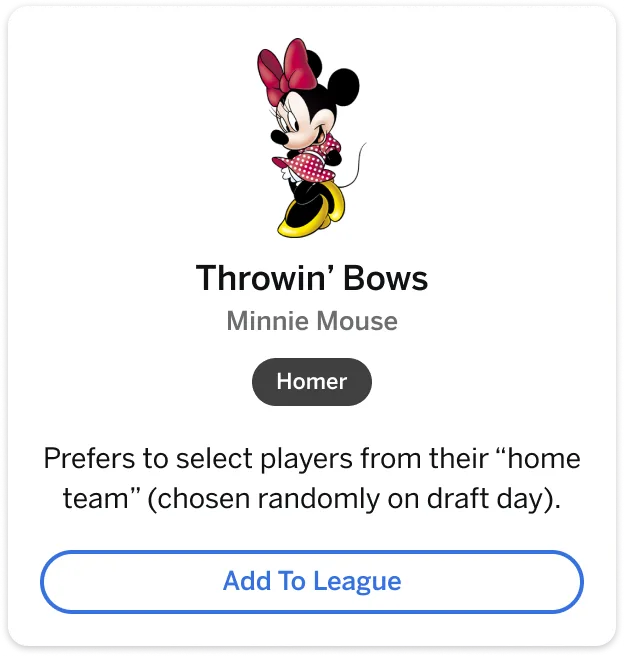
The Homer
Strategy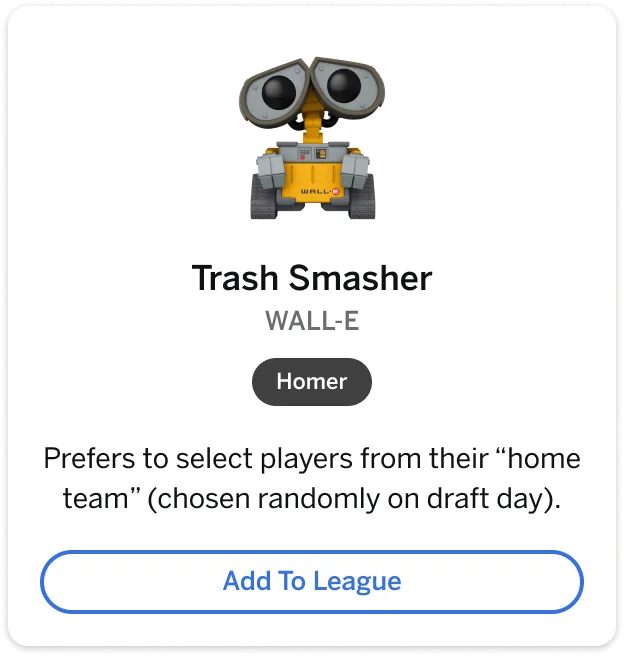
BehaviorPrefers drafting players from their favorite team.
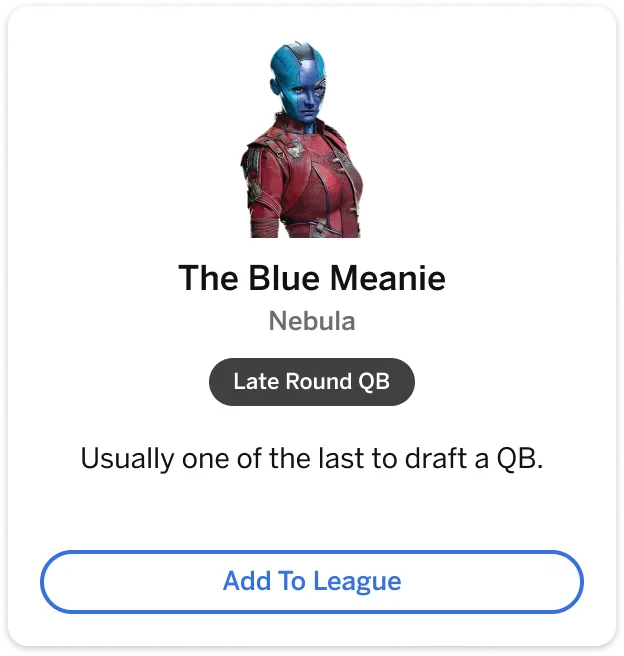
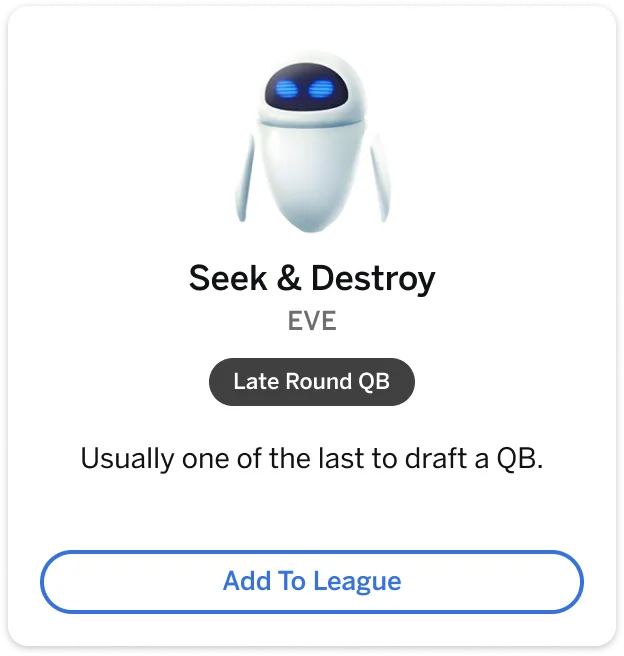
Late Round QB
StrategyBehaviorTypically waits longer to draft a quarterback.
First Time Drafter
Strategy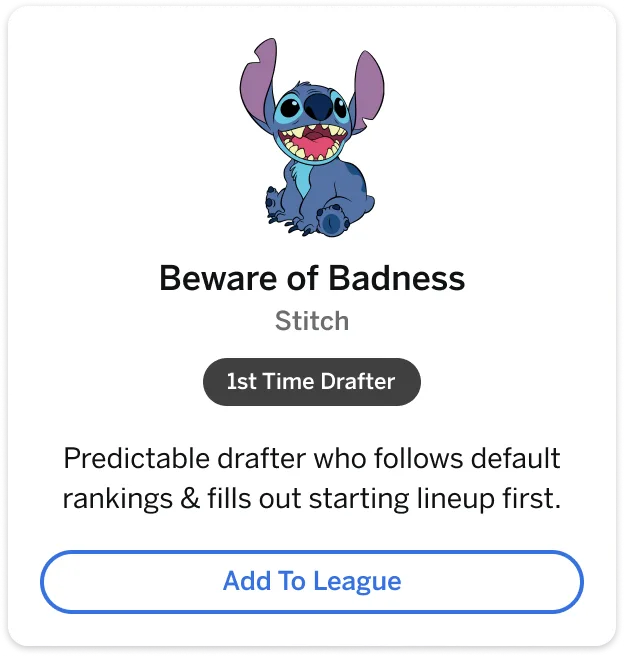
BehaviorFollows default rankings and fills the starting lineup before drafting bench players.
Handcuff Specialist
Strategy
BehaviorFocuses on depth charts and targets high-value backup running backs.
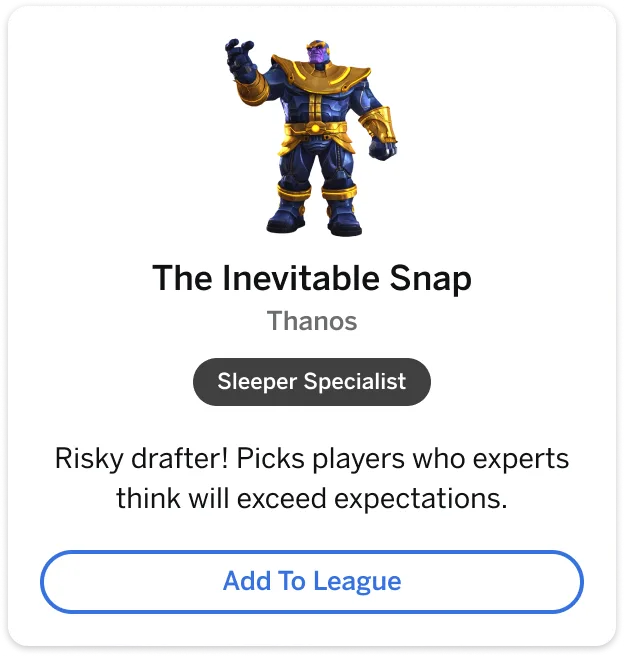
Sleeper Specialist
Strategy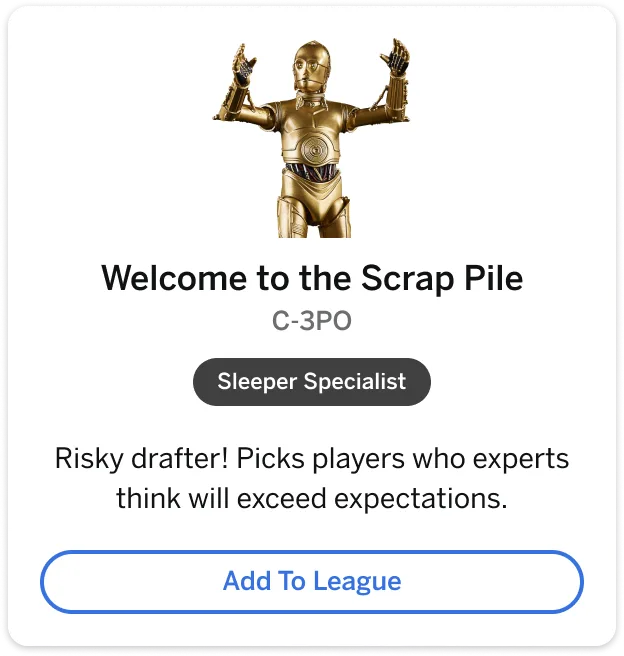
BehaviorTakes a riskier approach, looking for players who might outperform expectations.
Radar axes: QB priority · Risk · Team loyalty · Depth · Rankings
Filling an empty spot could actually change the draft.
The hard part was making all of this feel simple.
Once the underlying Auto Team system was defined, the challenge became fitting it into ESPN Fantasy without making commissioners learn an entirely new product.
- 01 · Creating a league
- 02 · Managing members and Auto Teams
- 03 · Understanding an Auto Team as an opponent
01
Add automation without adding friction.
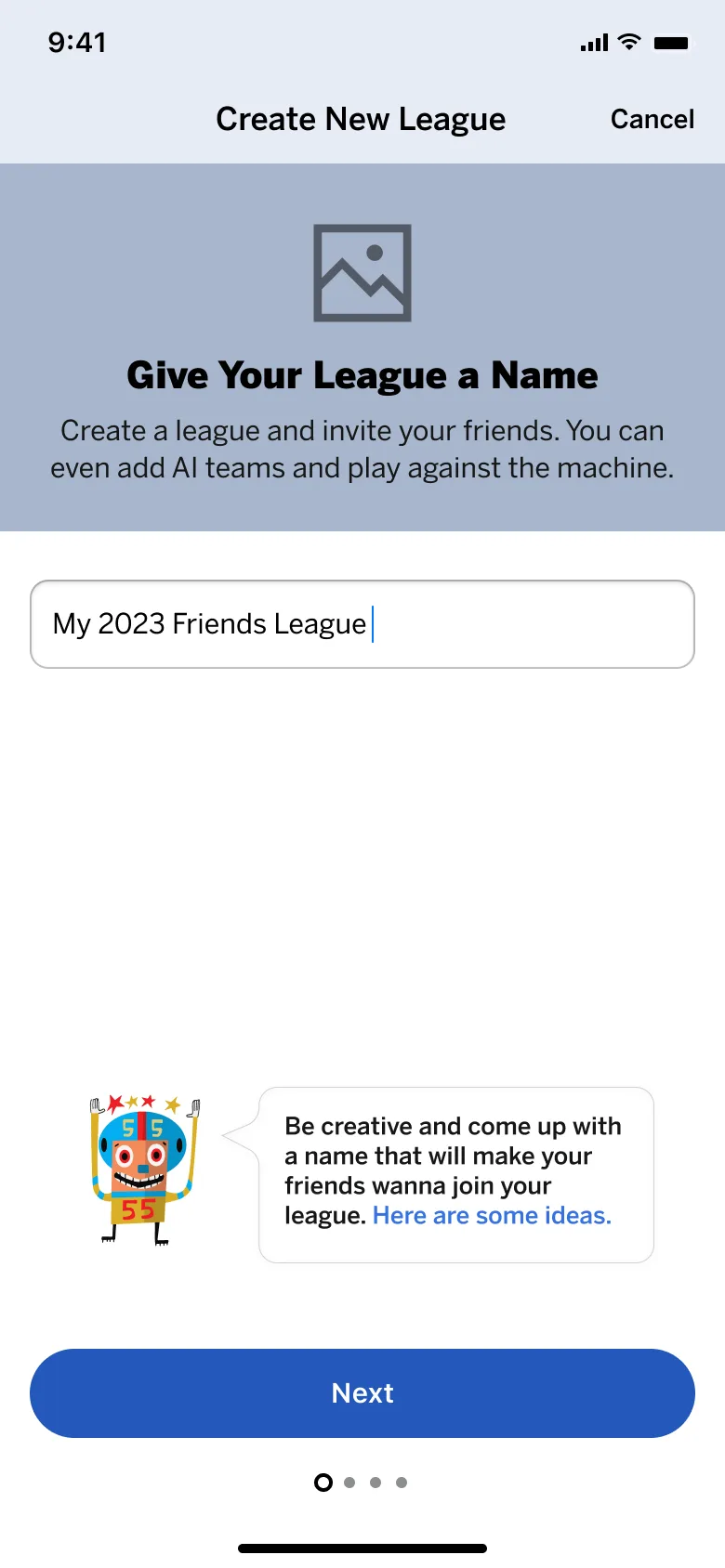
Early exploration
A multi-step wizard, one question per screen.
Refined direction
Name, size, and scoring collapsed onto one screen, with Auto Teams introduced inline.
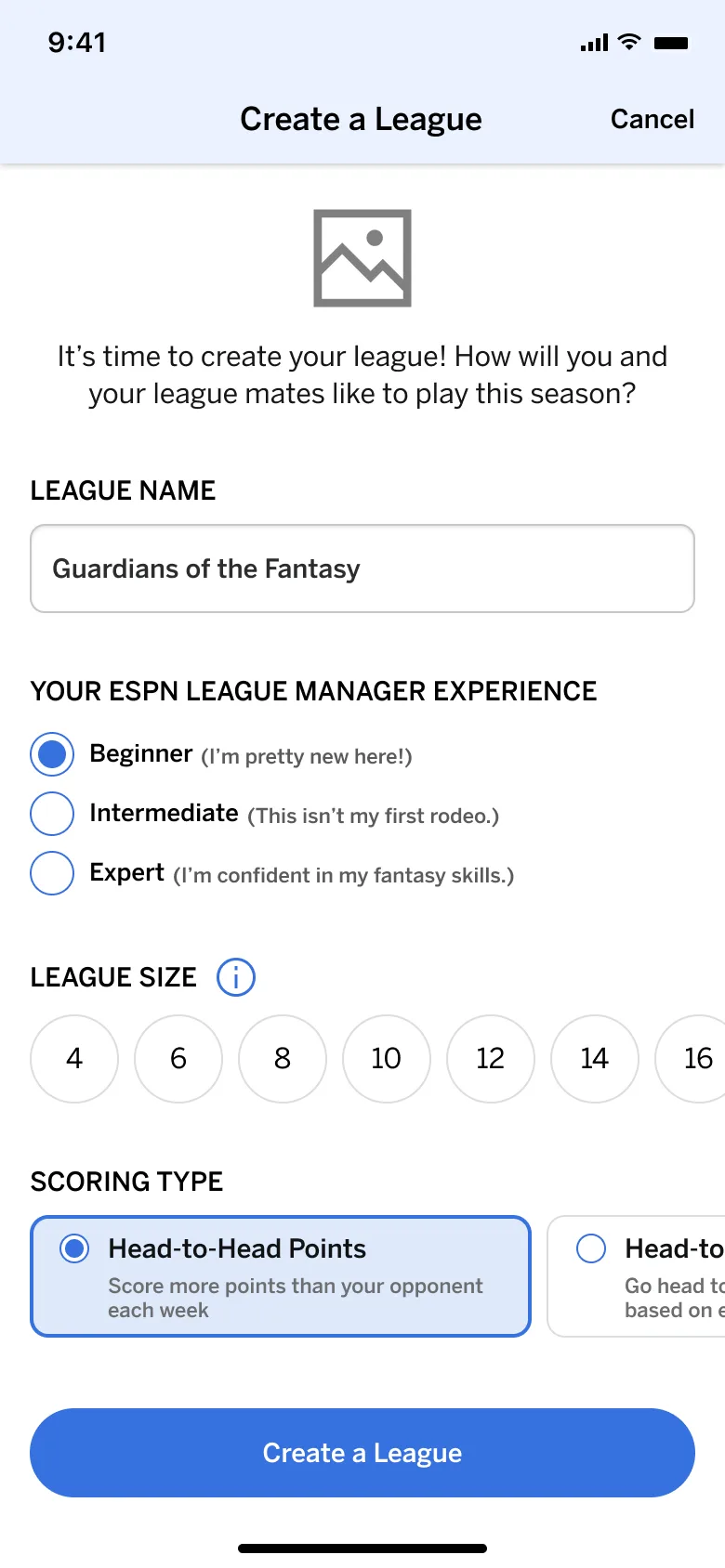
Final direction · Final
Manager experience added up front, so the league can be shaped around who is playing.
02
Make humans and Auto Teams instantly understandable.
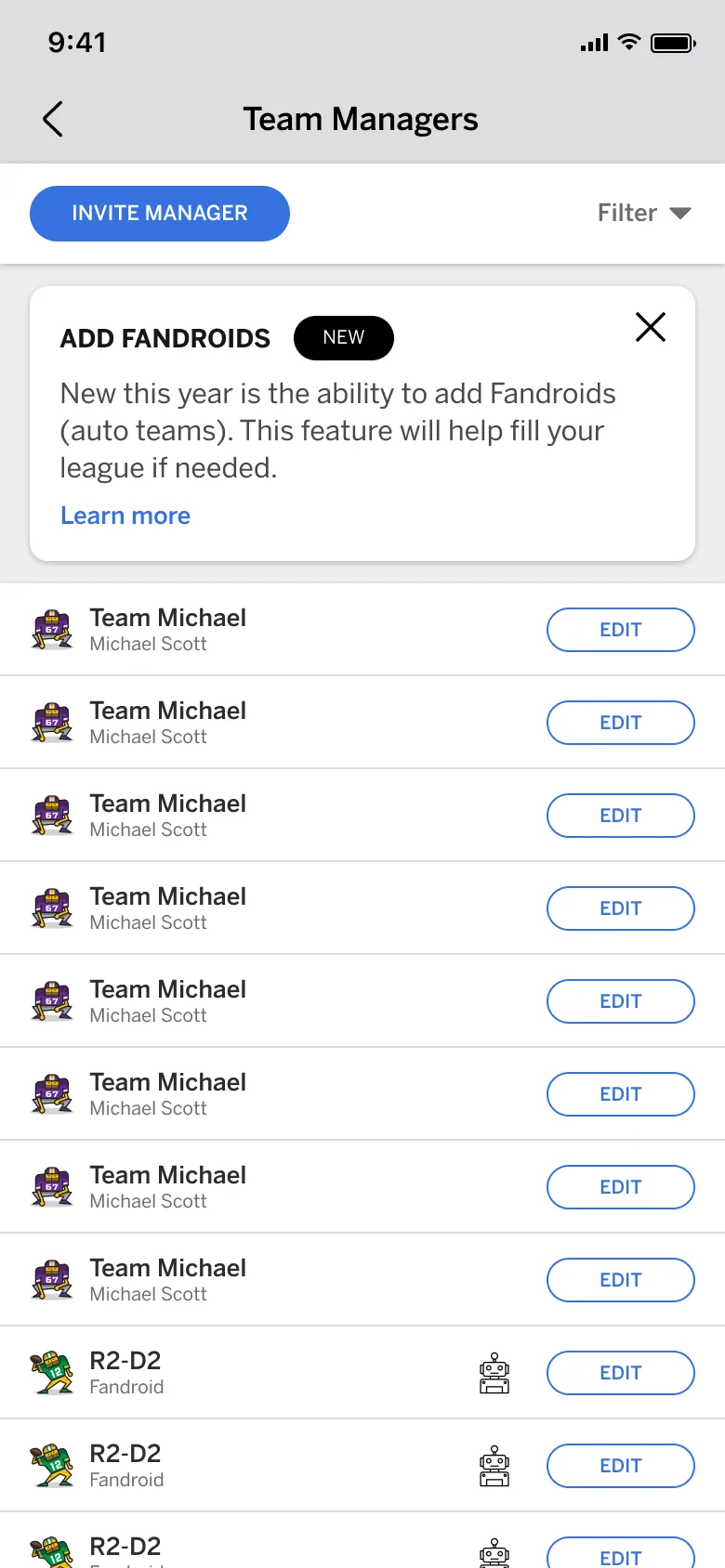
Iteration 1
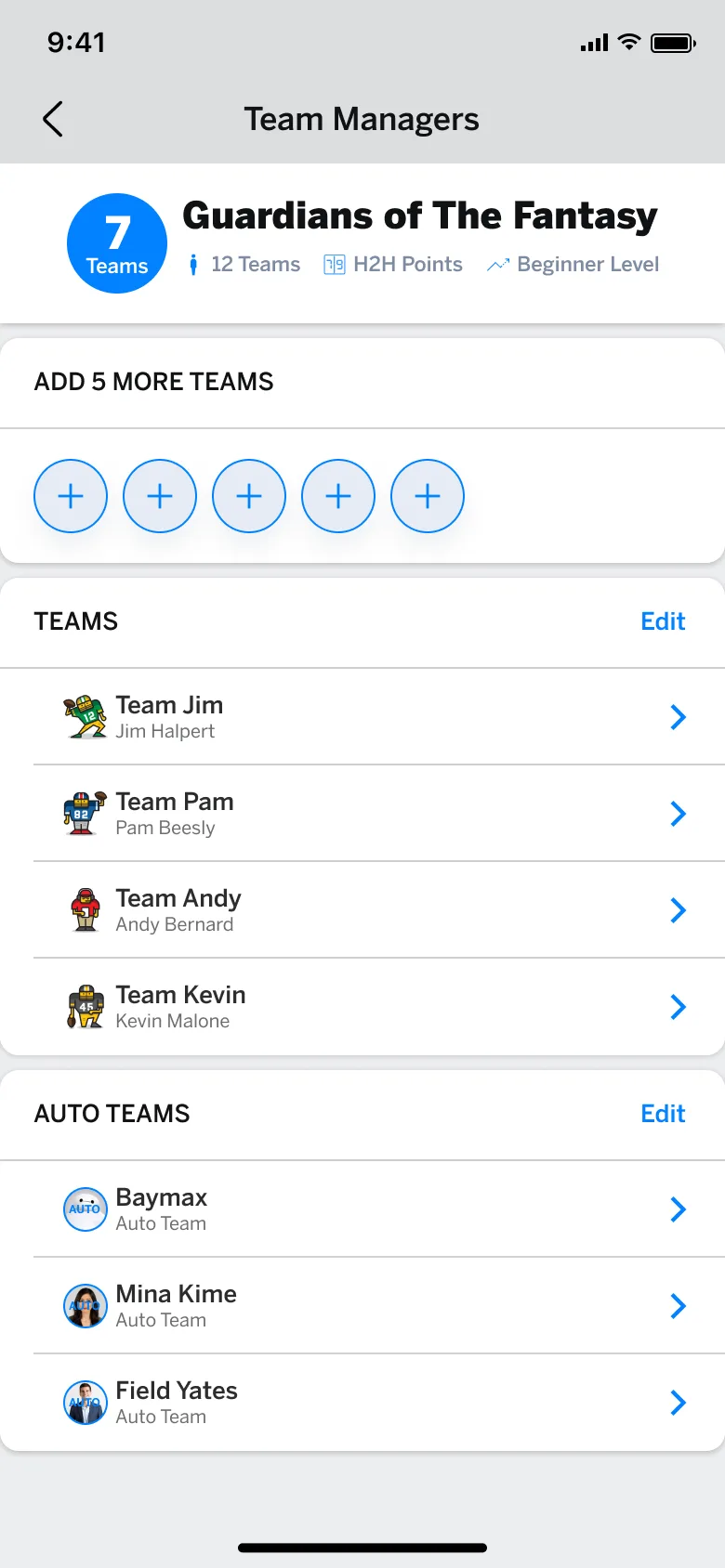
Iteration 2
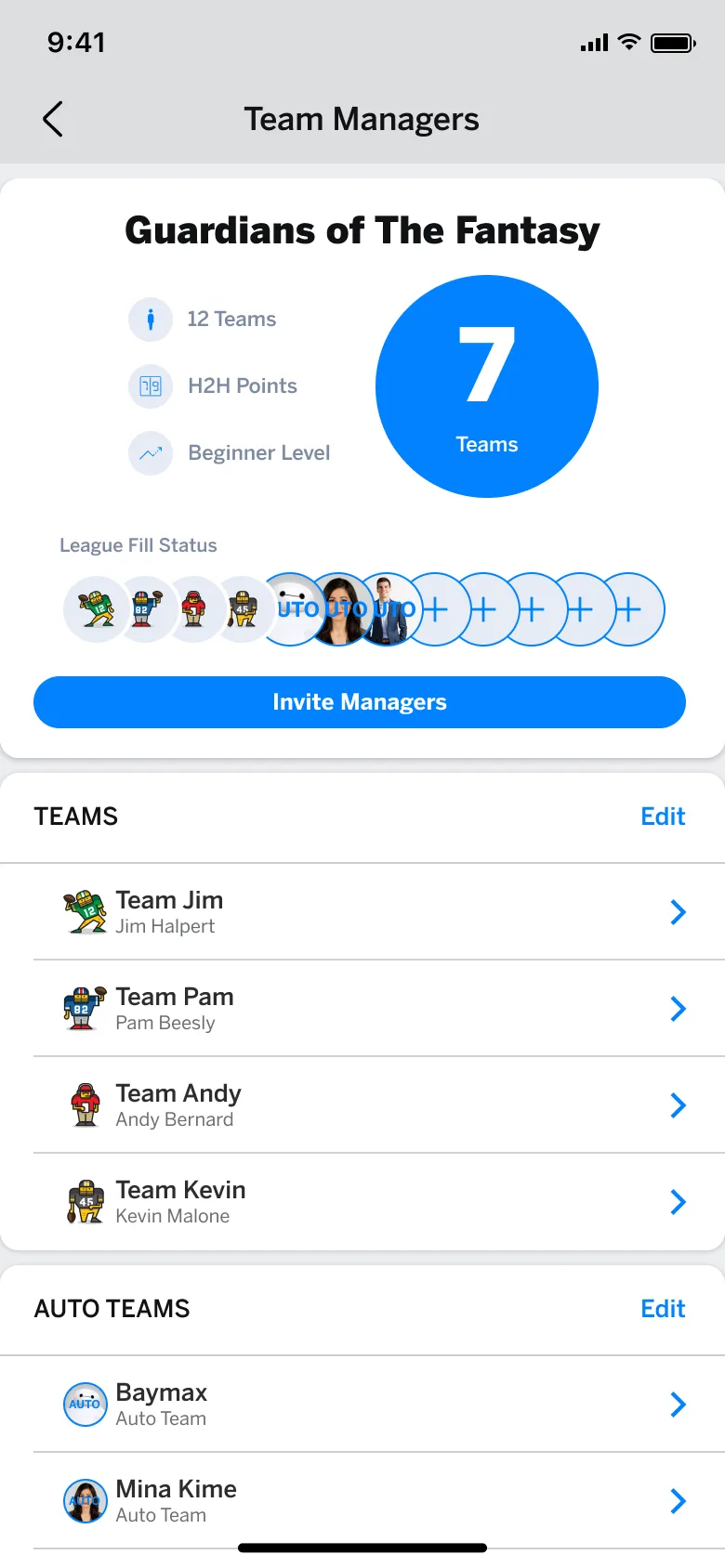
Iteration 3
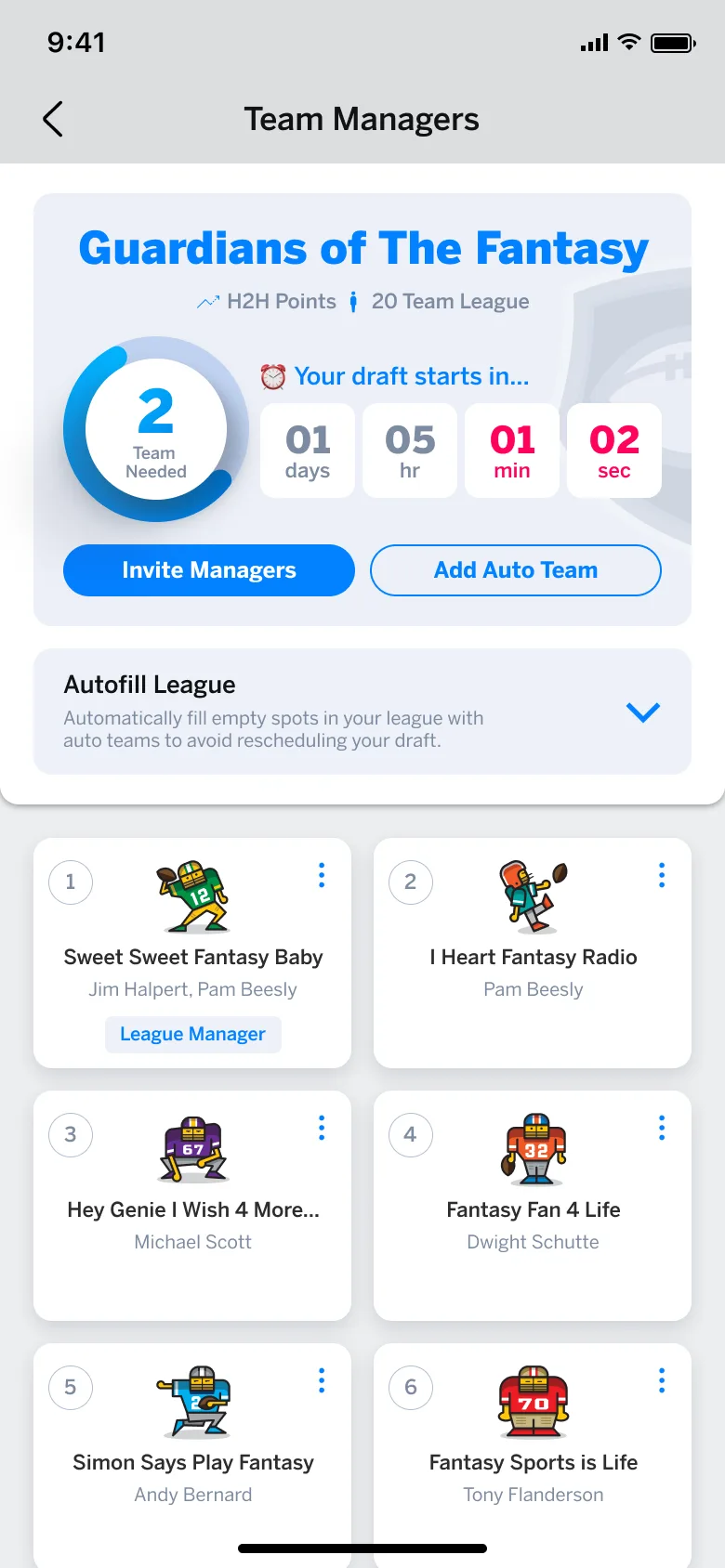
Iteration 4
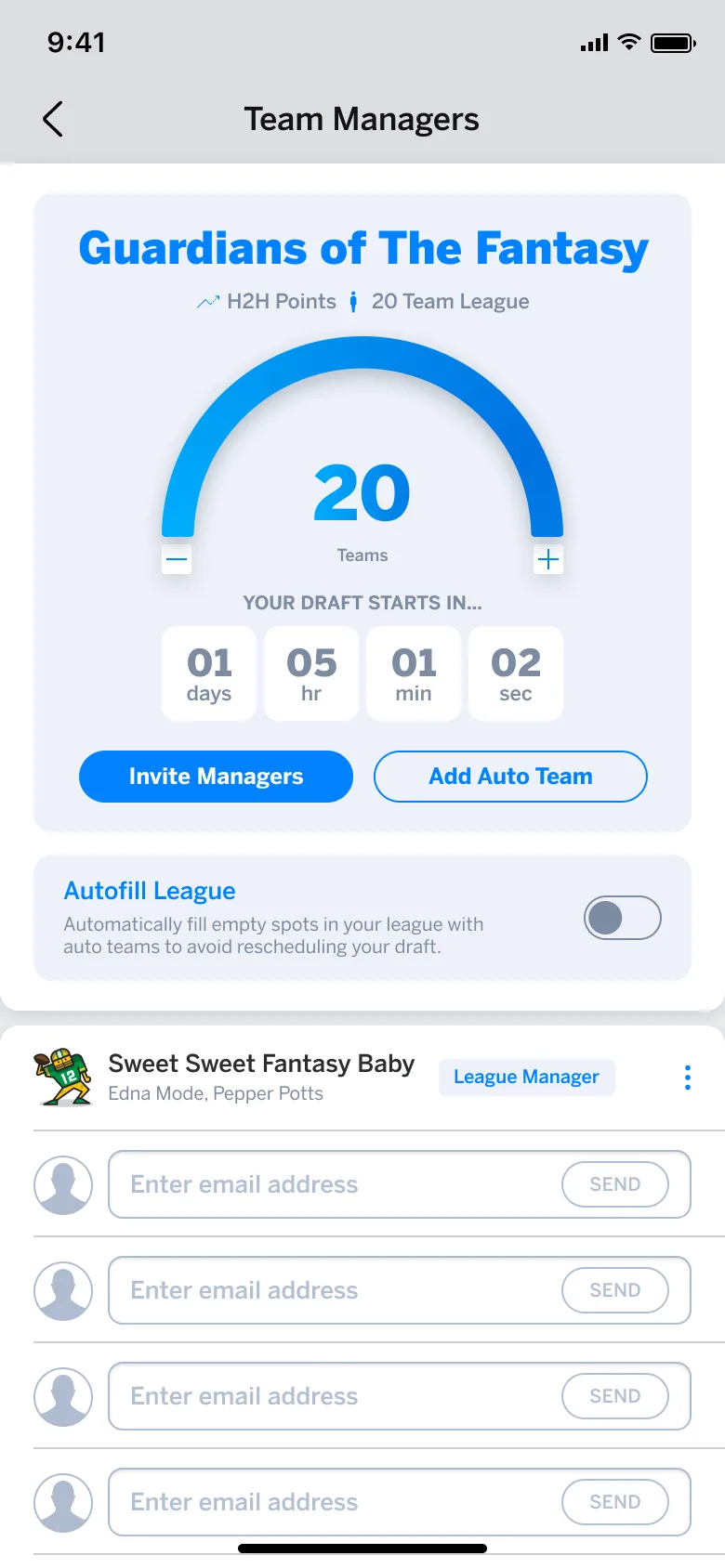
Iteration 5 · Final
03
A bot shouldn’t feel like a setting. It should feel like an opponent.
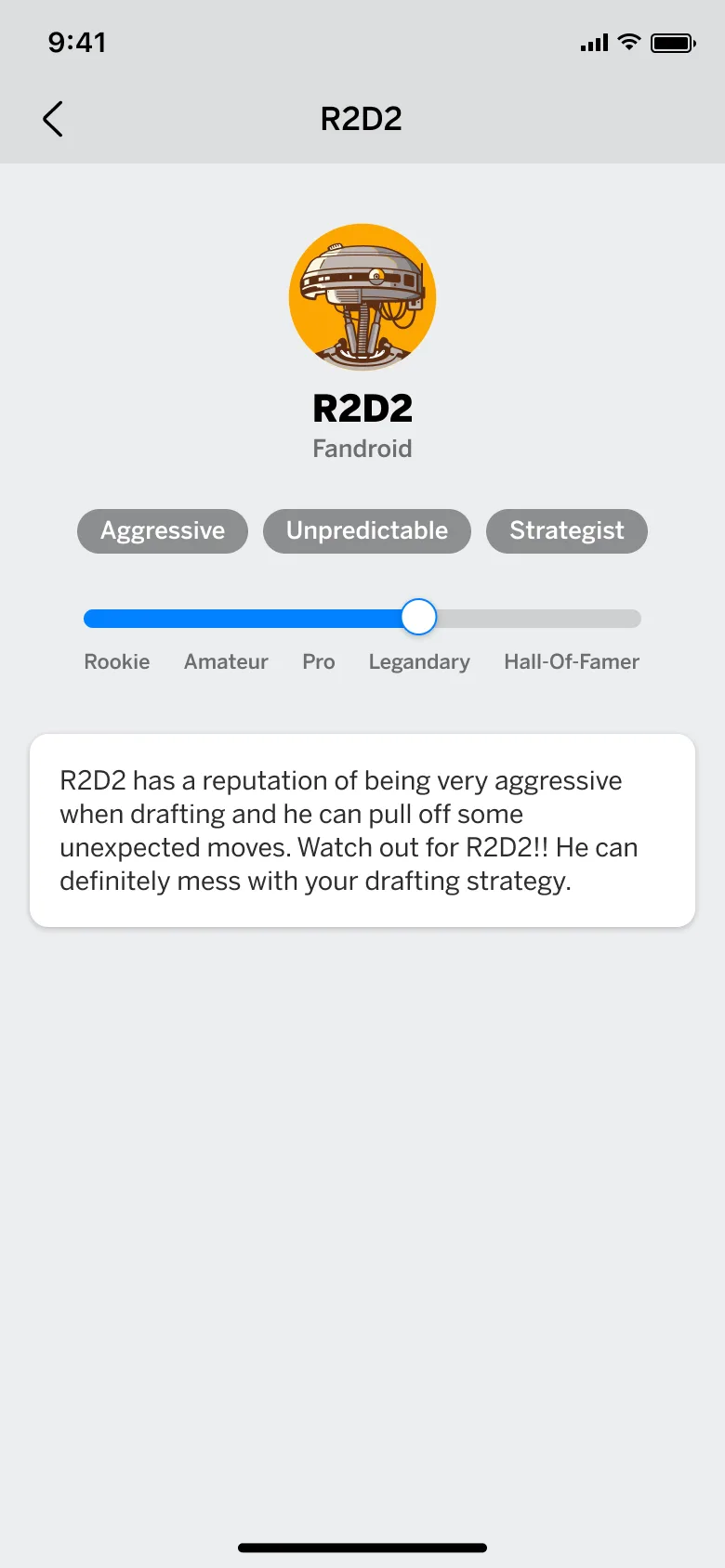
Identity
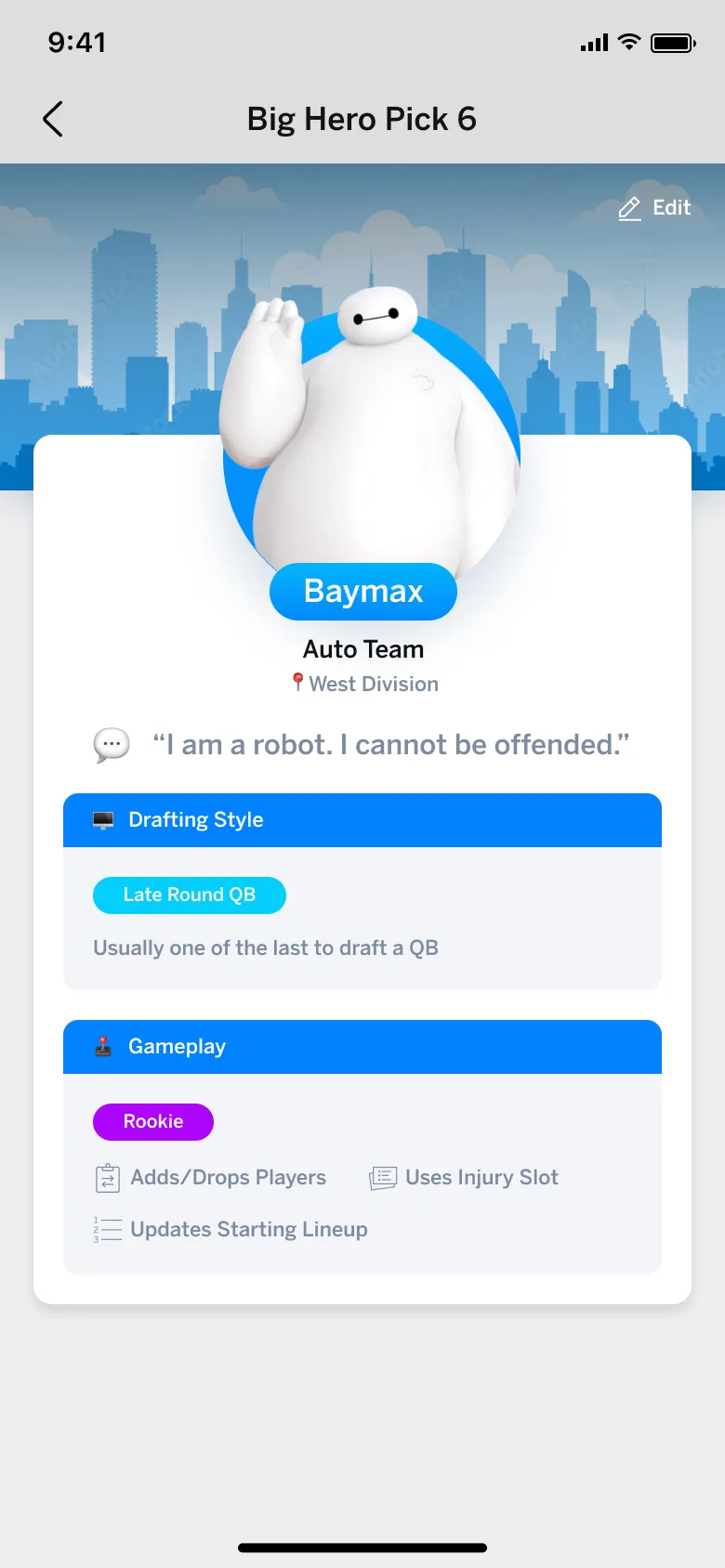
Skill
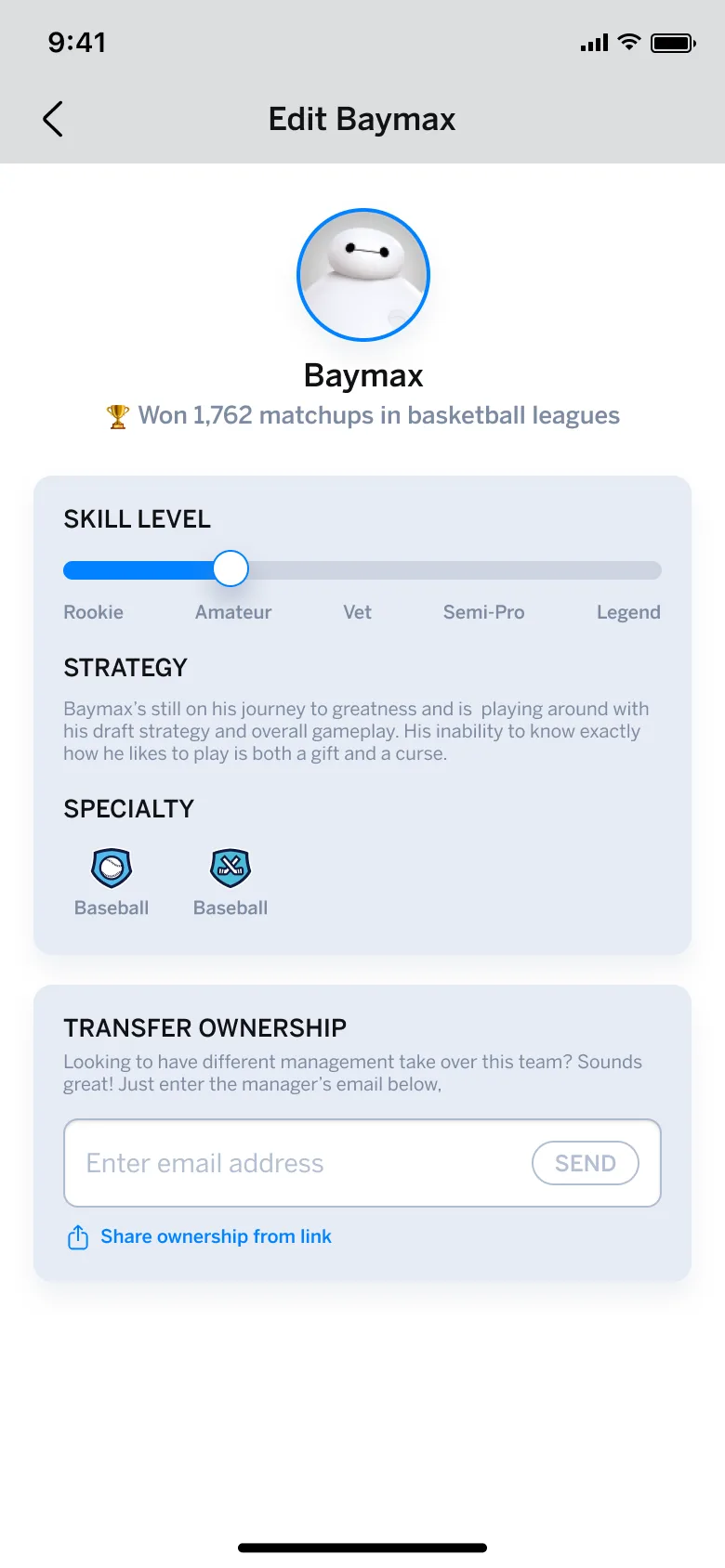
Strategy
Team preferences
Behavior + management · Final
One system.
Every screen.
Auto Teams were designed to feel native to ESPN Fantasy across mobile, tablet, and desktop.
Fill league with Auto Teams
Auto Teams profiles
League manager view
My role
Leading from ambiguity to a product vision.
I led Auto Teams from early discovery through product definition and design, working closely with Product while directing a small design team.
I conducted the research, developed the core workflows, and drove the majority of the UX and product design.
Gabby West partnered with me on content and storytelling, and together we presented the final vision to ESPN leadership and the broader design organization.
Product was closely involved throughout, keeping the concept aligned with product priorities and realities while the design team had significant freedom to explore the solution.
- Research
- Co-led
- Product strategy
- Led
- Core workflows
- Led
- UX / product design
- Co-led
- Design direction
- Led
- Leadership presentation
- Co-led
The concept earned buy-in.
The timing didn’t.
The project received strong feedback and support from ESPN leadership and the broader design organization.
We had established the product direction, core workflows, design system, and a path toward an MVP.
The initiative was not ultimately prioritized for development before I left ESPN in January 2025.

- Fan empathy
- Discover
- Insights
- Design
- Refine
- MVP direction
Future explorations
The system had room to grow.
The most interesting part wasn’t automating a fantasy team.
It was designing one people might actually want to play against.
Hugo Hellberg · Product Design Lead · ESPN