2015–16
The idea was born
Event organizers were using spreadsheets to track nearly every operational detail. I spent evenings and weekends exploring ways to turn that fragmented process into one product.
Planesty · The founder’s timeline
A problem in the events industry became a product, outside capital, a team, and a real B2B SaaS company — launched in March 2020, just as in-person events stopped.
01 · The company
2015–16
Event organizers were using spreadsheets to track nearly every operational detail. I spent evenings and weekends exploring ways to turn that fragmented process into one product.
2017
I raised early capital, hired three engineers, and welcomed Mike Fuller as co-founder. Hundreds of conversations with event organizers, venues, and suppliers gave us a clear problem to pursue.
2018–19
We raised more seed capital, expanded engineering, invested in trade shows and partnerships, and onboarded more than 100 companies. Frequent focus groups made the product better in public, not in isolation.

MAR 2020
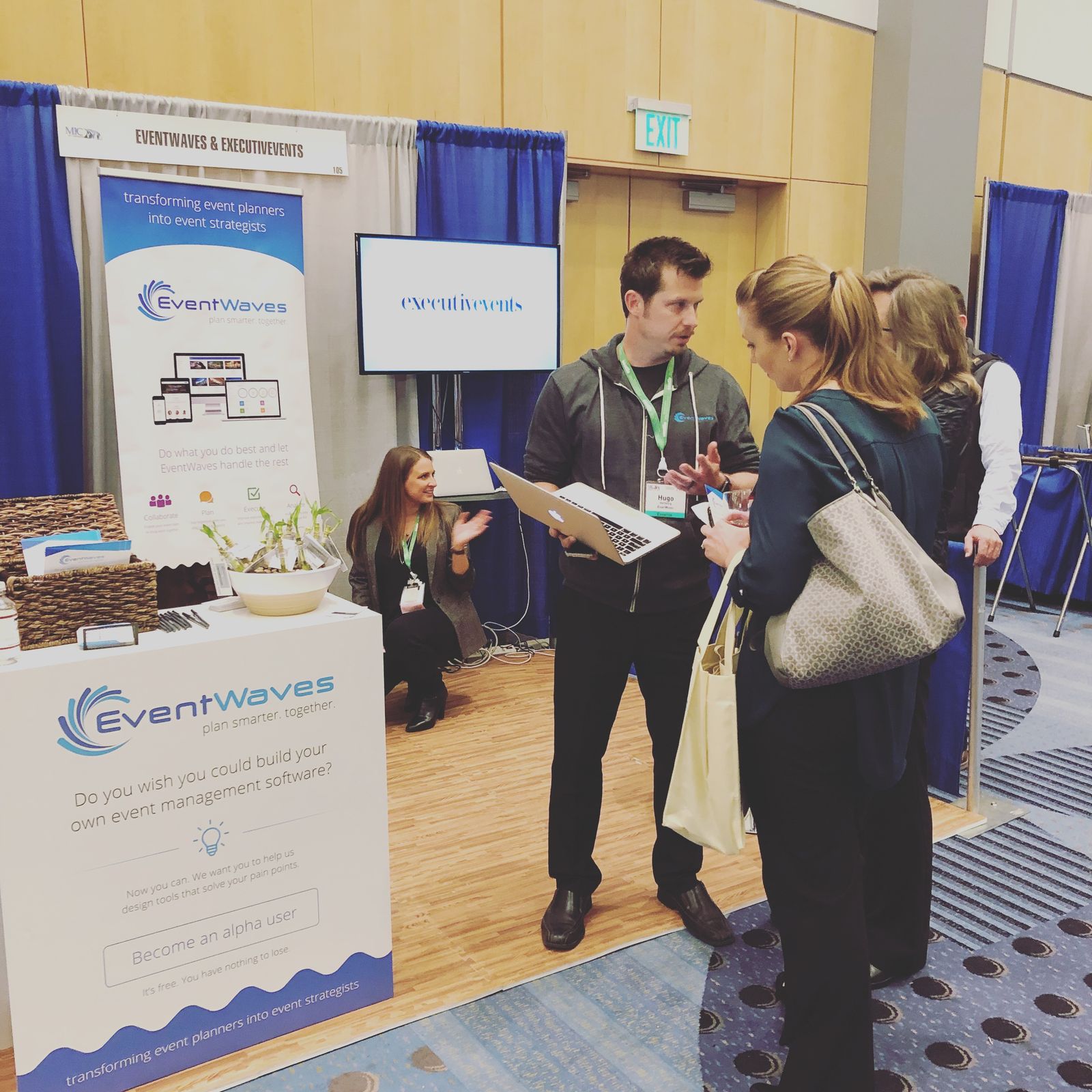
After four years, we launched at a major Denver trade show with 300+ users, a ten-person team, and agreements with two global event partners. The energy was through the roof.
2020–21
At that same launch, we heard the country would likely shut down. Two days later it did. Our product served in-person events, and that industry disappeared overnight. We kept building and supporting clients, but the pause lasted too long for the company to continue.
02 · The product underneath
Event pre-planning and onsite execution wasted enormous amounts of time, resources, and money. The prevailing process was manual, static, difficult to share, and impossible to scale cleanly.
Smarter software could save organizations money while creating a collaborative environment for organizers, venues, and suppliers — one shared source of truth instead of a trail of files.
Listen closely without outsourcing the roadmap. Customer evidence and product judgment have to work together.
Deep industry relationships gave us unusually direct access to people doing the work. Focus groups and trade-show conversations became our richest source of truth.
Surveys helped identify common patterns and gave us confidence about which of the many possible directions deserved attention.
Research participants became a natural community for beta testing, feedback, and eventual adoption.
We shipped collaboration features, document workflows, online signatures for operations documents, and sharing tools for outside collaborators.
Two growth teammates built partnerships and campaigns, but we deliberately prioritized customer success before chasing volume.
We learned to listen closely without outsourcing the roadmap — combining customer evidence with our own product judgment.
03 · Perspective
I founded the company, raised capital, led product design and research, managed the engineering team, helped build partnerships and marketing, formed a board, and learned every part of running a business while continuing to be its sole product designer for much of the journey.
Understand people deeply. Better product decisions follow when the problem, not a favorite solution, stays at the center.
Raising money is a design problem: investors are not buying today's interface; they are buying a credible picture of what could exist.
Stress, ambiguity, legal work, sales, leadership, and failure all became part of the job — and expanded what I knew I could handle.
Leading engineers and business partners across countries taught me to translate intent, invite expertise, and make decisions visible.
The ending was not what we chose. The judgment, craft, empathy, and resilience it built have shaped every product and team since.
Across every hat I wore, product design and healthy team culture remained the work I wanted to keep doing.